
Most of the agentic commerce discussion today is about getting found and ranked in ChatGPT, letting LLMs browse catalogues and complete transactions, and building conversational search into brands’ own channels.
All useful. But over the last few weeks I’ve been connecting with founders who are building what’s coming next, and I see three clear trends.
The experience moves to the consumer side
Today, virtual try-on and styling are mostly features on a brand’s own site. You try that brand’s products, in that brand’s experience.
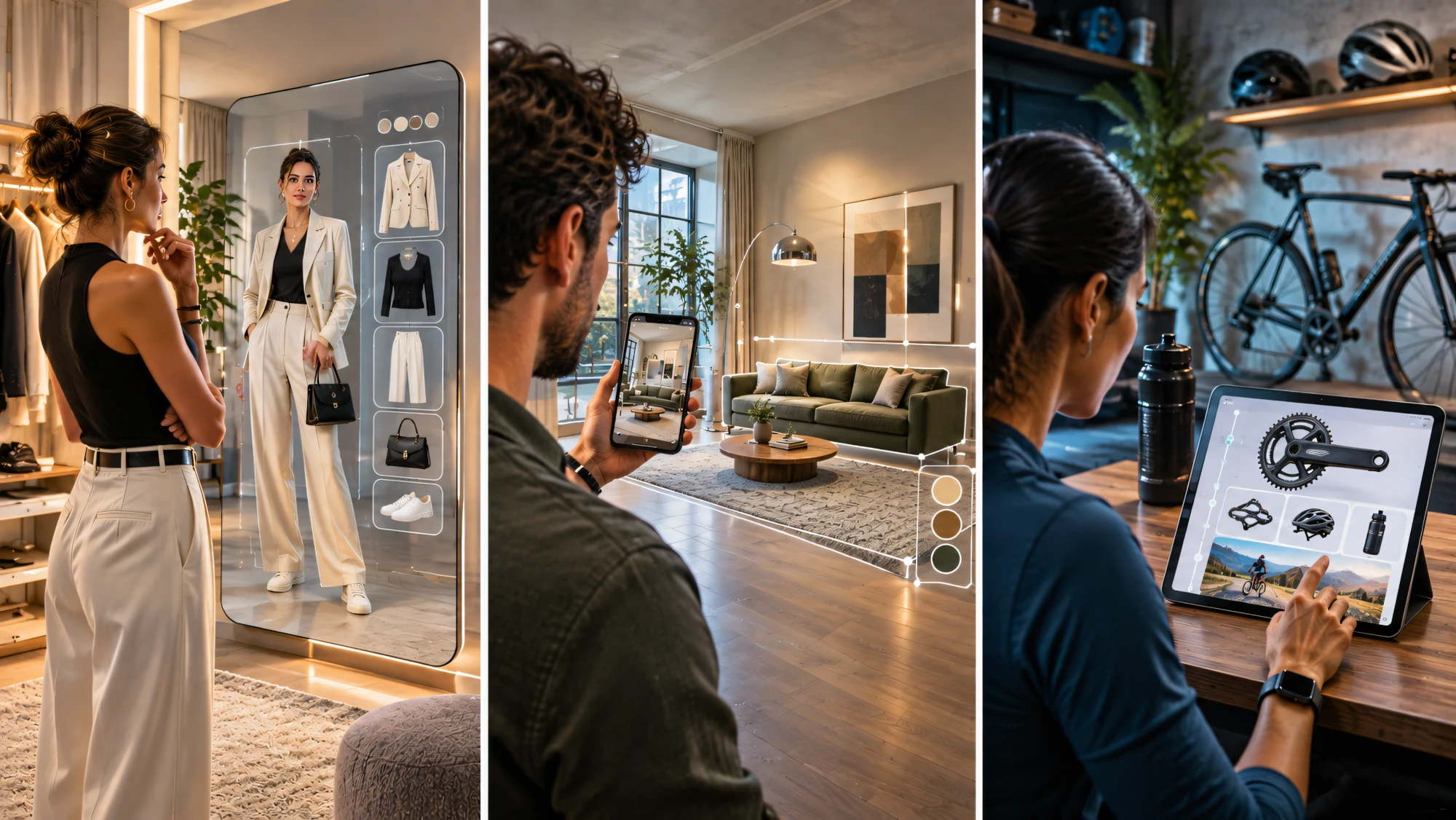
The founders I’m talking to flip this around. Think of a personal style agent that lives with you. It shows outfits on your own live avatar, combining pieces from different brands and retailers. It understands fashion, trends, and your size and fit.
The same is happening in other parts of the home. A home deco agent that understands the space you live in and places products from different brands into your actual room. Or an assistant that lives in your kitchen. It knows what’s in your fridge, what your family likes to eat and any dietary needs, suggests what to cook, and fills the gaps from whichever retailer fits best.
These experiences are visual, spatial and tied to your daily life, not text. They don’t fit naturally in a chat window.
Specialised assistants have a place next to the big ones
A lot of commentary assumes ChatGPT and the other large assistants will absorb everything. I don’t expect that, at least not for some time.
These specialised assistants rely on data built up over time, on other models and processing behind the scenes, and sometimes on direct vendor relationships. That’s hard for a generic assistant to replicate in a niche like fashion styling, interior design or food.
Product data needs to go beyond text
Everyone agrees brands need better product data for agents. The question is what kind.
For these experiences, text attributes aren’t enough. Agents need imagery, size and fit, materials, dimensions, ingredients, and how products combine with each other. That’s what lets an agent style an outfit, place a sofa in a room or plan a week of meals with confidence. Or a cycling assistant that knows your bike and only suggests components that actually fit.
My take
For brands, this means your products will increasingly be styled, compared and placed in someone’s home by agents you don’t own.
That’s a real opportunity. These agents can bring your products into the consumer’s world in a way your own site can’t.
The work many brands are already doing on cleaner, more accurate product data stays the foundation. It just needs to go further. The brands with the richest visual, fit and spatial data will be the ones these agents recommend.