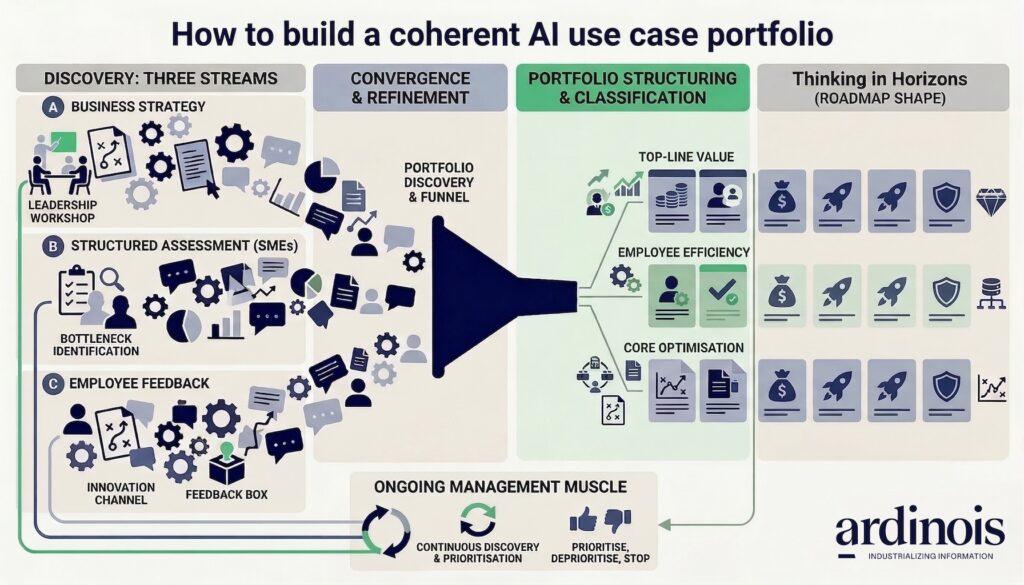
How to build an AI use case portfolio: a practical framework
Part 2 of 4 — AI Transformation: From Ambition to Impact One of the questions I get most often is some version of: “What is the AI use case that…
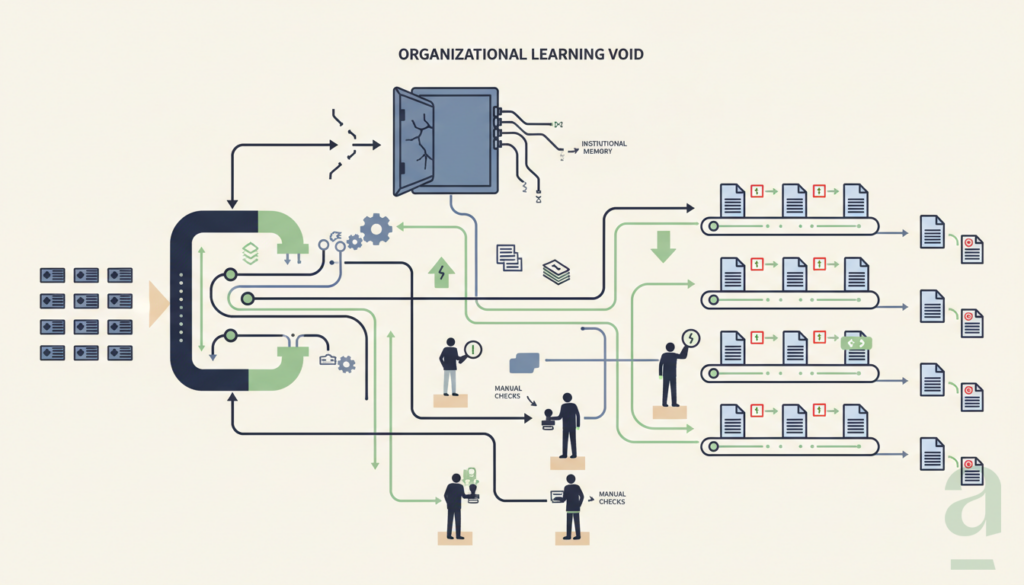
Why AI initiatives fail
And why the explanation is organisational, not technical Enterprise AI is not failing because the models are weak. It is failing because most organisations are not designed to absorb, validate,…
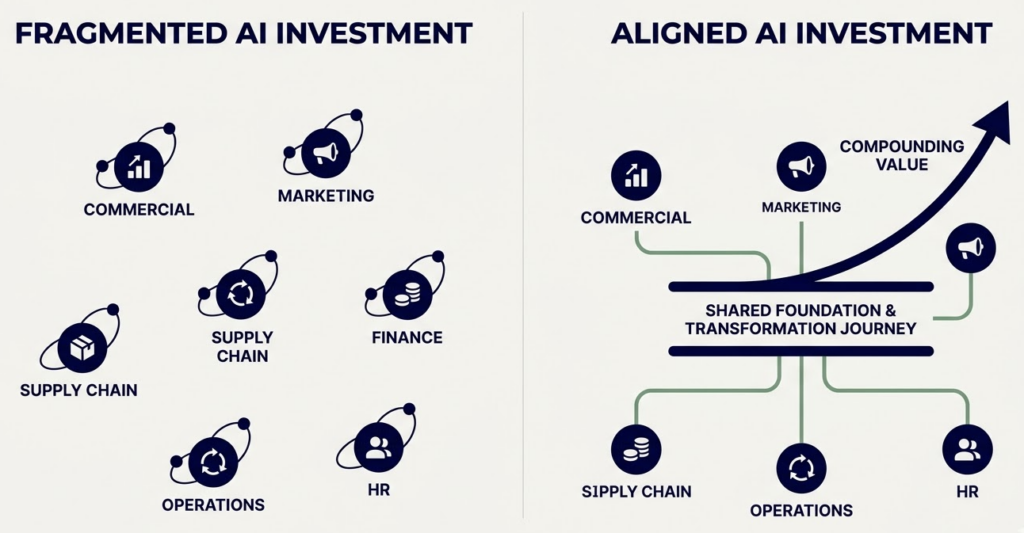
How aligned AI investment builds compounding value.
Part 1 of 4 — AI Transformation: From Ambition to Impact AI investment usually starts with a burst of energy and a lot of separate budgets. A few years in,…
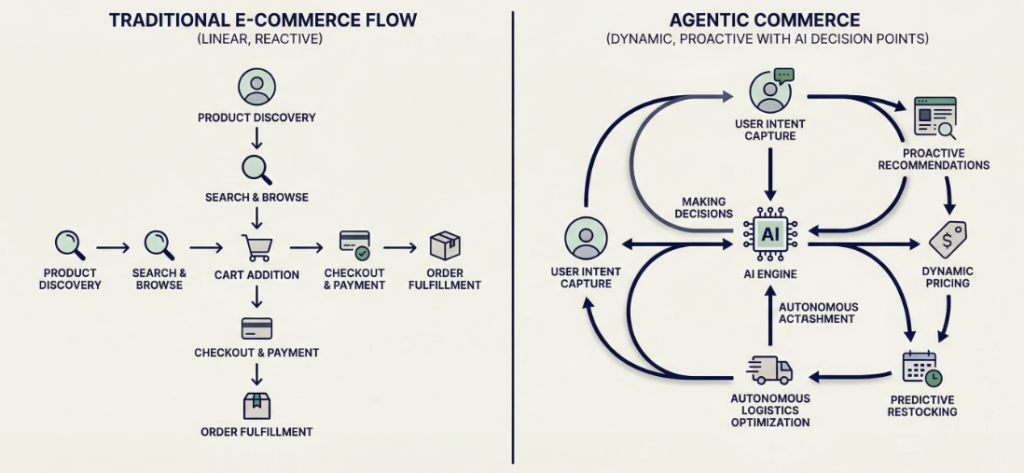
Agentic Commerce: A Practical Guide for Retailers
Agentic commerce is gaining traction as AI platforms position themselves to handle end-to-end shopping experiences. OpenAI’s recent commerce protocol launch makes the intent clear: these platforms want to own the…
Information is no longer a by-product.
In many cases, the information generated is more valuable than the transaction that produced it.
Yet most organisations still treat this information as exhaust: captured incidentally, stored unevenly, and rarely converted into reusable organisational knowledge.
From Industrial Age to Information Society
We live in an information society. This has been broadly accepted for decades. Executives nod along in strategy meetings. “Data is the new oil” has become so worn it’s almost meaningless. What has not followed is a corresponding reorganisation of how organisations are designed and managed.
Walk into most organizations and you’ll find structures designed for a different era entirely. Hierarchies built to coordinate physical production. Planning cycles calibrated to stable, predictable markets. Information systems that treat data as exhaust—a by-product of “real” work rather than the work itself.
The shift was acknowledged but the organisational response never fully materialized.
Building a Modern Data Landscape in the Age of AI
The enterprise data landscape is evolving rapidly. Many traditional architectures are struggling to keep up, facing challenges with data silos, vendor dependencies, and technical debt that slows innovation. Meanwhile, realizing…