
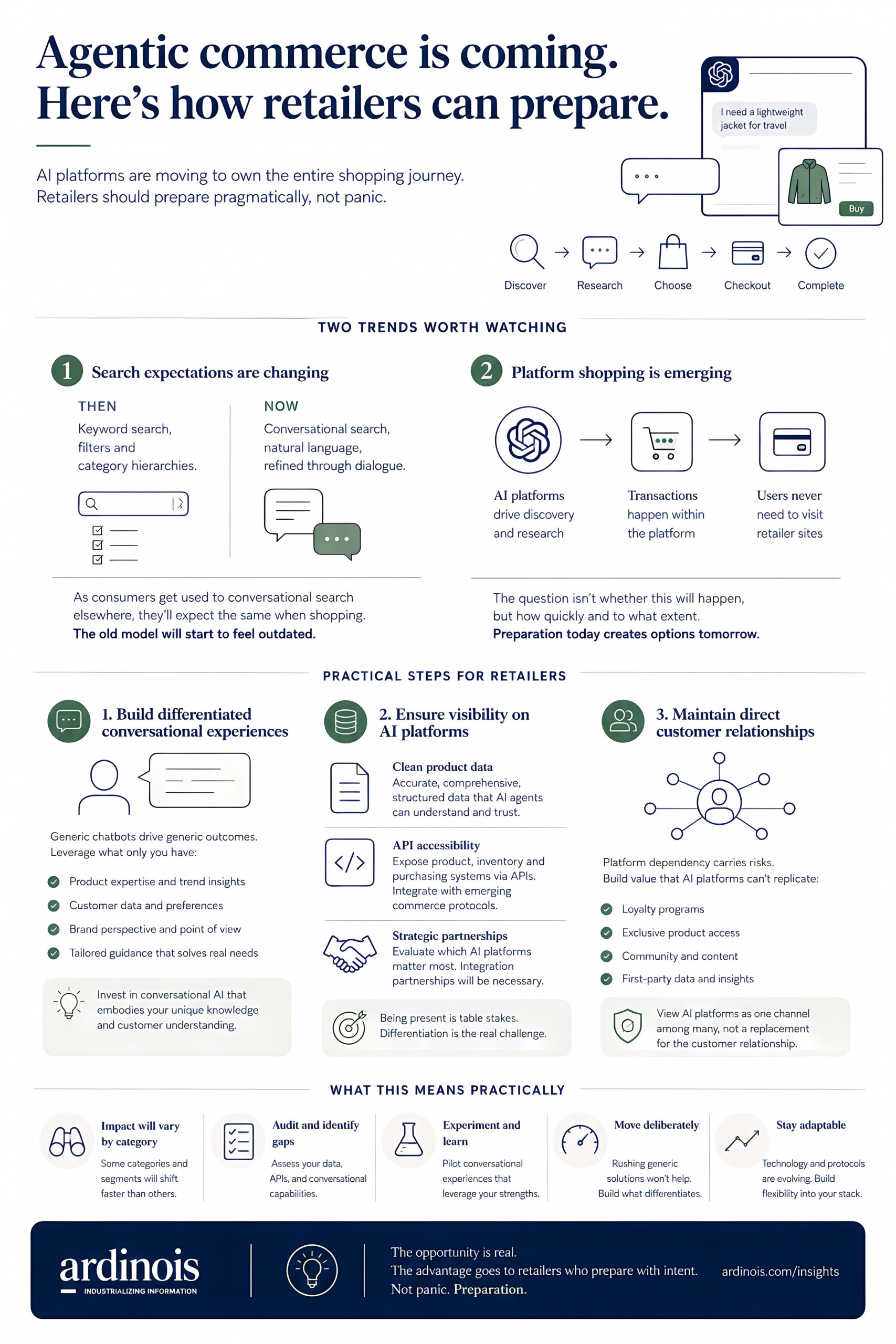
Agentic commerce is gaining traction as AI platforms position themselves to handle end-to-end shopping experiences. OpenAI’s recent commerce protocol launch makes the intent clear: these platforms want to own the entire customer journey, from product discovery to checkout. For retailers, this shift requires pragmatic preparation rather than panic.
Two Trends Worth Watching
Search Expectations Are Changing
E-commerce search has followed Google’s playbook for years. Consumers learned to navigate the internet through keyword searches, and online stores adopted the same paradigm: search boxes, filters, and category hierarchies.
That model worked because it matched consumer behavior. Now behavior is shifting. People increasingly use conversational interfaces like ChatGPT and Perplexity to find information. They ask questions in natural language and refine through dialogue rather than reformulating keyword queries.
This matters for retail because information discovery patterns shape shopping expectations. As consumers grow accustomed to conversational search elsewhere, they’ll expect similar experiences when shopping. The keyword-and-filter model that has dominated for two decades will start feeling outdated.
Platform Shopping Is Emerging
Beyond changing search behavior, there’s a more fundamental shift: consumers are starting to use AI platforms for product research and purchase decisions. OpenAI’s commerce protocol represents a direct effort to enable complete transactions within their ecosystem, keeping users from ever visiting a retailer’s site.
The question isn’t whether this will happen, but how quickly and to what extent. Some product categories will migrate faster than others, and certain customer segments will adopt earlier. The trajectory is clear enough that preparation makes sense now.
Practical Steps for Retailers
Build Differentiated Conversational Experiences
Generic chatbots will drive generic outcomes. If your conversational interface simply helps customers navigate your product catalog, you’re offering nothing distinctive. Any AI platform can provide that functionality across multiple retailers simultaneously.
The opportunity lies in leveraging what only you have: your specific product expertise, trend insights, customer data, and brand perspective. A furniture retailer shouldn’t just help customers find sofas; they should guide room planning based on dimensions, usage patterns, and style preferences. A specialty food retailer should provide recipe suggestions, pairing advice, and seasonal recommendations that reflect their culinary point of view.
This requires investment in conversational AI that’s tailored to your brand rather than deployed off-the-shelf. The technology enables personalization at scale, but only if you build experiences that embody your unique knowledge and customer understanding.
Ensure Visibility on AI Platforms
If consumers are discovering and purchasing through ChatGPT or similar platforms, you need to be present and integrated there. This means:
Clean Product Data: AI agents need accurate, comprehensive product information to make recommendations. Invest in structured data with detailed specifications, clear descriptions, and proper categorization.
API Accessibility: Your product catalog, inventory, and purchasing systems should be accessible programmatically. The emerging commerce protocols require retailers to expose their systems via APIs and have a clear integration layer with the many emerging protocols, requiring flexibility on the vendor’s end.
Strategic Partnerships: Evaluate which AI platforms matter most for your category and customer base. Integration partnerships will likely be necessary to maintain visibility as these channels grow.
Being present on these platforms is table stakes. The harder question is how to remain differentiated when your products appear alongside competitors in AI-generated recommendations.
Maintain Direct Customer Relationships
Platform dependency carries real risks. While you should prepare to transact through AI channels, preserving direct customer relationships remains critical.
Focus on building value that extends beyond individual transactions. Loyalty programs, exclusive product access, and community engagement are difficult for AI platforms to replicate. First-party customer data becomes more valuable, not less, as intermediary platforms proliferate.
The retailers who navigate this transition successfully will be those who view AI platforms as one channel among many rather than ceding the entire customer relationship.
What This Means Practically
Agentic commerce will reshape parts of retail, though the timeline and scope remain uncertain. Different categories will be affected differently. High-consideration purchases with complex requirements may be more resistant to platform shopping than commodity products.
The sensible approach is measured preparation: audit your current capabilities, identify gaps in product data and API infrastructure, and begin experimenting with conversational experiences that leverage your unique strengths.
The technology is moving quickly, but rushing to deploy generic solutions won’t help. Better to be deliberate about building experiences and capabilities that actually differentiate your brand in this emerging landscape.