
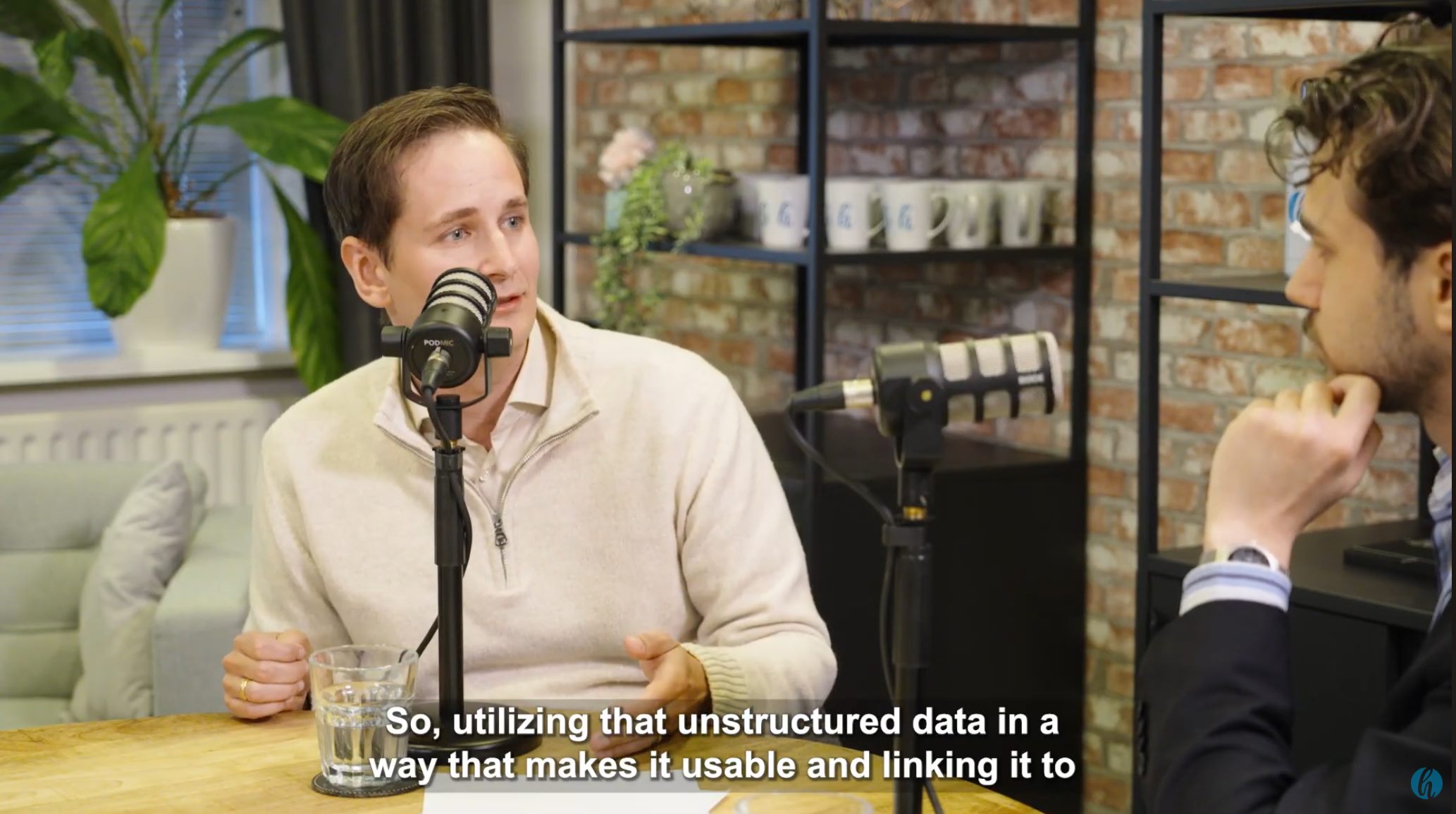
Sander, co-founder of Ardinois, joined High on AI, the AI podcast of Highberg, to discuss AI transformation in retail. Drawing on his experience leading AI organisations at H&M and Nike, the conversation covered where value actually sits in retail AI — and why most of it remains unrealised.
Machine learning and generative AI are complementary, not interchangeable
Forecasting remains the core operational discipline of retail: what to buy, at what price, through which channel. That is a traditional machine learning problem, and it will stay one. Generative AI adds something different. It makes unstructured, external information usable at scale. Social signals from TikTok and Instagram can now be categorised automatically and fed into forecasting models, bringing the outside perspective into decisions that were previously based only on internal historical data.
Value sits in integration, not in individual systems
Every vendor in the retail value chain now ships an AI module. Each one operates within its own silo. But the decisions that matter, such as how to move end-of-season inventory at the best possible margin, require customer data, inventory data, and channel data together. No single system can make that decision. Integration across systems is therefore the precondition for AI value, not an afterthought.
Models do not carry organisational context
A new analyst needs six months to become productive, because organisational knowledge is implicit. It lives in conversations, in tribal knowledge, in the heads of colleagues. A language model has none of this. Conversational analytics works well within a narrowly defined domain where context can be supplied. It breaks down when domains are connected. The central question for any organisation is how to make enterprise context explicit, governed, and available to the systems that need it.
Foundations before pilots
Individual use cases deliver value, but each one carries start-up costs. Without a shared foundation of integrated data, governed knowledge, and organisation-wide AI literacy, every initiative starts from zero. The pattern Sander has seen repeatedly: tools change every few months, while the underlying questions of data access and governance remain unsolved. Organisations that invest in the foundation gain speed and scale. Organisations that chase tooling do not.
The advice to executives
Do not pursue AI for its own sake. Start from company strategy, identify where technology can move it, and ensure the integration layer is flexible enough to absorb whatever tooling comes next. The technology will keep changing. The foundation is what makes that change affordable.